
Table of Contents
- What Is the Minimum Space Required for a Home Elevator?
- General Space Guidelines:
- The Nibav Advantage: Compact Design, Big Performance
- Why Nibav Stands Out:
- Comparing Common Home Elevator Dimensions by Type
- What to Consider When Planning for an Elevator in Your Home
- Can You Install a Home Elevator Without Major Renovations?
- Who Should Consider a Compact Home Elevator?
- Conclusion: Small Footprint. Big Upgrade.
If you’ve been thinking a home elevator takes up a lot of space and requires an overhaul, let me ease your mind—modern home elevators are a lot smaller, more fashionable, and more efficient than ever. Nibav USA has models that can fit into as little as 1000 mm of clear space, which means they require very minimal space and can fit into small homes, duplexes, and even apartments!
So, how much space do you need to install a home elevator? What structural and “clearance” requirements do you need to consider? Fortunately, this blog can help you.
We will go over the requirements for elevator installations, typical home elevator measurements, and the minimum elevator spaces needed for the different types of elevators. We will also mention how Nibav’s compact design is changing the game in the USA and allowing more homeowners to enjoy the luxury and convenience of a home elevator.
What Are the Basic Elevator Installation Requirements for Homes?
Installing an elevator in your home used to be an ordeal—quite literally. Traditional systems involved their own dedicated shafts, deep pits, overhead machine rooms, and heavy walls. Those days are all but gone, as new-age designs promise to reapproach those fundamentals from the perspective of flexibility and ease.
There are a handful of bare-minimum requirements for most homeowners to think about:
1. Floor Area
This represents the horizontal area your elevator will use. Traditional systems usually require 4 to 6 square feet of floor area per stopping point, while modern pneumatic systems like Nibav can accomplish something similar in much less.
2. Ceiling Height
Most of the time, each floor of the home requires 8 to 10 feet of clear ceiling height in order to accommodate the cabin, doors, and overhead components.
3. Pit and Overhead Clearance
Conventional elevators will often require a pit for the car, often 12–18 inches deep and above the top landing. Pneumatic and vacuum elevators often do not require a pit or overhead—another space-saving win.
4. Electrical Supply
Elevators need power, but many modern residential models run on a single-phase 220V supply, the same as your oven or dryer. Nibav’s elevators are energy-efficient and don’t require a dedicated generator or backup power (though one can be added).
5. Permits and Inspections
Local building codes vary, but you’ll likely need a permit and a safety inspection before and after installation. A certified provider like Nibav USA will walk you through all of this.
What Is the Minimum Space Required for a Home Elevator?
This is the big question—and the answer depends on the type of elevator you choose. For older hydraulic or traction elevators, you might need as much as 1500 mm x 1500 mm (about 5 x 5 feet) just for the shaft. Add in pit and overhead space, and you’re suddenly talking serious structural work.
But newer models—especially self-supporting or pneumatic elevators—dramatically reduce space requirements.
General Space Guidelines:
| Elevator Type | Minimum Floor Space | Pit Required? | Machine Room? |
| Hydraulic | 1500 mm x 1500 mm | Yes | Often, yes. |
| Traction | 1400 mm x 1400 mm | Yes | Yes |
| Pneumatic/Vacuum | 1000 mm diameter | No | No |
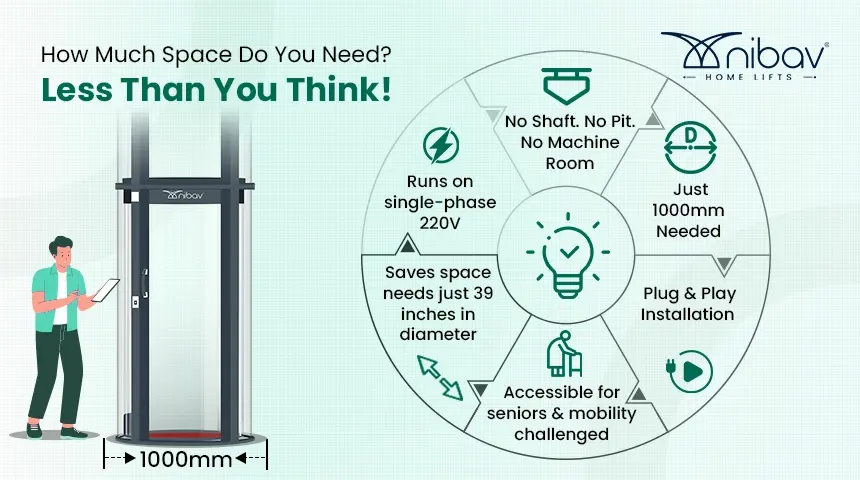
With Nibav’s elevators, you only need 1000 mm (approx. 39 inches) of clear floor space for a standard installation. That’s less than the width of most bathtubs! The vertical tube sits cleanly through a floor cut-out and doesn’t need additional rooms or construction.
So yes, you can have a home elevator even if you think your home is “too small.”
The Nibav Advantage: Compact Design, Big Performance
Nibav USA has quickly become a go-to brand in the home elevator space—and for good reason. Their elevators combine international engineering standards with sleek design and, most importantly, space efficiency.
Why Nibav Stands Out:
1. Space-Saving Innovation
Nibav’s standard model requires just 1000 mm of clear diameter, which means you can fit it into tight corners, stairwells, or unused nooks. No shaft. No pit. No machine room.
2. Plug-and-Play Installation
Nibav elevators are pre-engineered and modular, meaning they’re assembled on-site without the need for major civil work. You can install them even in fully built homes.
3. Self-Supporting Structure
Their elevators are made of high-grade aluminum and polycarbonate, creating a self-supporting tower. That eliminates the need to reinforce floors or walls.
4. Style Meets Function
The cabins are transparent, stylish, and quiet. They add to the aesthetics of your home while improving accessibility.
5. Built for U.S. Homes
All models offered by Nibav USA meet American safety standards and come with features like auto-rescue, power backup, and child safety locks.
In short, Nibav doesn’t just save space—they elevate it.
Comparing Common Home Elevator Dimensions by Type
Let’s take a quick look at how different types of elevators compare when it comes to size and space requirements.
| Elevator Type | Cabin Dimensions | Space Needed (Clear Area) | Notes |
| Nibav Pneumatic Elevators | 900 mm cabin diameter | 1000 mm clear space | Most space-efficient |
| Hydraulic Elevators | 900–1100 mm width | 1500 mm x 1500 mm | Needs pit & machine room |
| Traction Elevators | 1000 mm x 1000 mm+ | 1400 mm x 1400 mm | Often requires shaft & overhead |
| Shaftless Platform Elevators | 800 mm x 1300mm | 1200 mm x 1500 mm | Limited to 2 stops, not enclosed |
Takeaway:
If saving space is a top priority—or if your home doesn’t allow major renovations—Nibav is clearly the best option in terms of footprint.
What to Consider When Planning for an Elevator in Your Home
Installing an elevator in your home isn’t just about space—it’s about lifestyle. Here are the top things to consider:
1. Space on Each Floor
Make sure there’s enough room directly above and below the planned elevator spot. Nibav’s modular systems make this easy to align vertically.
2. Power Source
As mentioned earlier, single-phase 220V is usually enough. Make sure the installation area has access to electrical wiring.
3. Aesthetics and Visibility
Home elevators are no longer just utility items—they’re style statements. Choose a design that matches your interiors. Nibav offers customizable color options and transparent cabins.
4. Accessibility and Safety
Consider who will be using the elevator: seniors, children, or individuals with mobility issues? Nibav models come with anti-fall systems, emergency stop buttons, and battery backup for extra safety.
5. Budget and Value
Space-saving elevators typically cost less to install and maintain. And they add to your property’s resale value — a smart long-term investment.
Can You Install a Home Elevator Without Major Renovations?
Absolutely—especially if you’re using a Nibav USA model. Traditionally, installing an elevator required cutting through multiple floors, building a shaft, and setting up a machine room. That often meant moving out during construction or delaying other parts of your build.
But with Nibav’s pre-assembled modular systems, you can:
- It can be installed in under a week
- Avoid messy structural work
- Maintain the look and feel of your existing home
- Place it virtually anywhere (including near staircases, in corners, or even in the living room)
If you’re retrofitting an elevator into an existing home, Nibav’s compact, self-supporting model is one of the most practical solutions available in the U.S. market.
Who Should Consider a Compact Home Elevator?
You don’t need to be building a mansion to consider a home elevator. In fact, more and more homeowners across the U.S. are installing elevators as a lifestyle upgrade or to future-proof their homes.
Here’s who should consider it:
1. Elderly or Mobility-Challenged Residents
Navigating stairs daily becomes harder with age. A compact elevator removes that struggle.
2. Families Building Forever Homes
Installing a home elevator ensures your home remains livable long-term, even decades from now.
3. Homes with Vertical Layouts
Multi-level homes, townhouses, and duplexes benefit most from space-efficient vertical movement.
4. Working Professionals or Entrepreneurs
Impress clients with a stylish, high-tech feature in your home office or studio.
5. Homeowners Avoiding Major Construction
Nibav’s no-shaft, no-pit design is perfect for those who want a sleek upgrade without turning their house into a job site.
Conclusion: Small Footprint. Big Upgrade.
Gone are the days when elevators were only for hotels or luxury penthouses. Today’s compact, stylish systems—like those offered by Nibav USA—make home elevator installation possible even in tight spaces and on tight budgets.
With models requiring as little as 1000 mm of clear space, Nibav has removed nearly every barrier to entry. No shaft. No pit. No machine room. Just a safe, sleek, and powerful way to move between floors effortlessly.
Whether you’re planning for the future, upgrading your home, or improving accessibility, a home elevator isn’t just a smart choice—it’s a life-changing one.
Get in touch with our home elevator experts now and experience your home with a whole new level of luxury and comfort.
Talk to Our Experts
Jeneice Timmons
This blog really cleared up my misconceptions about home elevators! I always assumed they required a huge amount of space and construction, but learning that Nibav elevators fit in just 1000 mm is amazing. The no-pit and no-shaft design makes it sound perfect for compact U.S. homes like mine. Great info!
Heather Woods
I’ve been researching home elevators for my parents, and this post helped me understand the actual space requirements. The comparison chart made things super clear. Love how Nibav USA has made installation simple and stylish without heavy remodeling. Definitely considering one for our duplex!
Kenny Smith
What a great breakdown of elevator types and space needs! I live in a townhouse, and the idea that I can install a home elevator without a shaft or machine room is a total game-changer. Nibav USA seems to have made this process so much easier and more accessible for smaller homes.
Gretchen Bliss
Reading this made me rethink what’s possible in small homes. The Nibav elevators’ sleek, transparent design sounds not only space-saving but also adds a modern touch. I appreciate how clearly the blog explains every requirement, from electrical setup to ceiling height. Really helpful content!
Fariba Goharchin
This article explained everything I needed to know about home elevator space requirements. I loved how it compared traditional systems with the new Nibav pneumatic models. The “small footprint, big upgrade” message totally hits home these elevators seem ideal for modern American lifestyles.
Gwen Daniel
Fantastic post! I’ve been curious about adding an elevator to my two-story home, but space was my biggest concern. Learning that Nibav’s models fit in such a compact area and don’t require major construction is a relief. Definitely bookmarking this for when we start our home renovation.
estelle thomas
Such a practical and well-written guide! It’s refreshing to see a company like Nibav USA prioritize space efficiency and design. The blog really helped me visualize how easy it can be to add a home elevator, even in existing structures. I’m genuinely impressed with how simple the installation sounds.