
Table of Contents
- Introduction – The New Normal in Residential Mobility in the USA
- Traditional Elevators – Big, Noisy, and Complex
- The Science of Vacuum Elevators – How They Work
- Why Vacuum Elevators Are the Quiet Choice
- Space Use – Making the Most of Every Square Foot
- Vacuum Elevators vs. Conventional Elevators – An Easy Decision
- Advantages of Vacuum Elevators for Homes in the U.S.
- Nibav USA & Why They Are the Best
- FAQs – Vacuum Elevator Benefits
- Conclusion – Quiet, Compact, and Built for the Future
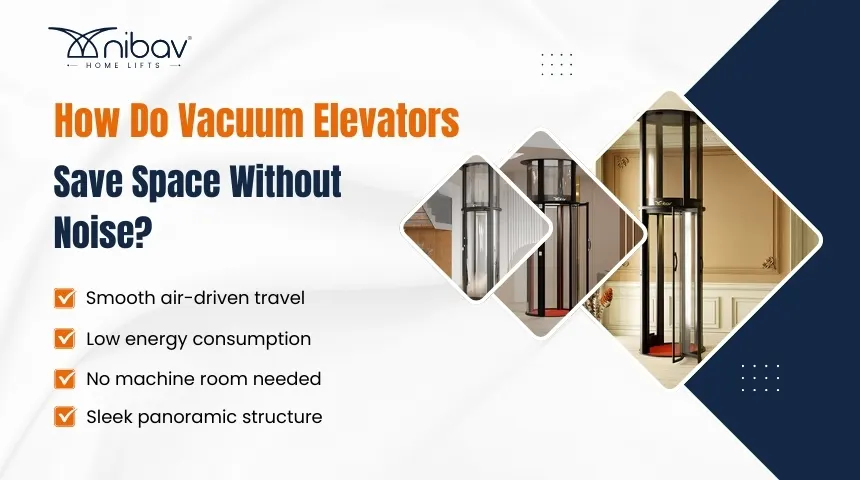
Vacuum elevators from Nibav Lifts USA save space with a shaftless, compact design and reduce noise using air-powered technology. No cables or hydraulics means smoother, quieter rides ideal for modern American homes in 2026.
Introduction – The New Normal in Residential Mobility in the USA
When people envision an “elevator,” they usually picture large mechanical systems found in office buildings or hotels—machines with heavy-duty cables, massive counterweights, and deep pits dug into concrete, often accompanied by loud mechanical noises. For many years, that was the definition of an elevator.
However, the idea of the home elevator has evolved dramatically. No longer reserved for the upper class or individuals with physical disabilities, elevators have become a lifestyle upgrade for modern homes across the USA.
Enter vacuum elevators a true innovation. Unlike traditional elevators, which are bulky and noisy, vacuum elevators are quiet, compact, stylish, and environmentally friendly. They represent the perfect solution for American homeowners, especially where efficient use of space and convenience of lifestyle are priorities.
In this blog, we’ll explore how vacuum elevators offer a quiet, space-efficient alternative to traditional elevators, highlight their unique features, and explain why so many U.S. families are embracing this new era of mobility with Nibav elevators.
Traditional Elevators – Big, Noisy, and Complex
Before appreciating the benefits of vacuum elevators, it’s important to understand the challenges that come with traditional elevators.
1. Space Needs
Traditional elevators rely on mechanical components such as a shaft, counterweight, and a dedicated machine room. When installed in a home, they typically require:
- A deep, reinforced pit foundation—sometimes four feet below grade.
- A separate machine room, often above or adjacent to the shaft.
- Structural modifications to reinforce attachment points and floor load capacity.
This means traditional elevators occupy significant square footage in homes.
2. Noisy Operations
Hydraulic and traction elevators generate vibrations and mechanical noise. While tolerable in public buildings, pumps, gears, and metal components can be disruptive in the quiet of a residential home.
3. High Installation Costs & Time
Installing a traditional elevator often takes weeks or even months. It involves heavy machinery, complex construction, and expensive civil modifications.
4. Energy Demands
Hydraulic elevators rely on oil and pumps, while traction models consume large amounts of electricity to move counterweights. Both require regular, costly maintenance. These challenges make traditional elevators less appealing for homeowners. This is where modern vacuum elevators present a clear solution.
The Science of Vacuum Elevators – How They Work
Vacuum elevators, also known as pneumatic elevators, operate on the principle of atmospheric pressure. Instead of cables or pistons, they use air pressure differences to move the cabin.
Here’s a simple breakdown:
- A sealed tube forms the elevator shaft.
- A turbo fan system generates suction, lifting the cabin upward.
- Once the desired floor is reached, gravity gently lowers the cabin with minimal energy.
- Intelligent valves regulate airflow, ensuring smooth stops at each floor.
This cable-free and oil-free design makes vacuum elevators eco-friendly, space-efficient, and nearly silent.
Why Vacuum Elevators Are the Quiet Choice
Noise pollution inside homes is a growing concern. Families want peaceful environments where children can study, parents can work, and seniors can rest. Quiet vacuum home elevators are the answer.
1. No Heavy Equipment
Hydraulic elevators require pumps and traction elevators rely on gears and motors, but vacuum elevators use air suction. With fewer moving parts, they operate discreetly.
2. Quiet Descent
Vacuum elevators descend using gravity, not motors. This means the cabin glides down silently, without consuming power.
3. Less Vibration
Gearless technology ensures smooth rides, eliminating the rattling and vibrations associated with older elevators.
4. Quiet Living Environment
Whether it’s seniors riding late at night or children using the elevator during the day, the ride is whisper-quiet, contributing to a peaceful home.
Space Use – Making the Most of Every Square Foot
In the U.S., every square foot matters. Traditional elevators consume large amounts of space, but space-efficient vacuum elevators solve this challenge.
1. Small Footprint
Vacuum elevators typically require less than 1.5 square meters. Their cylindrical, self-supporting structure allows installation almost anywhere—living room corners, beside staircases, or even outdoors.
2. No Pit or Machine Room
Thanks to pitless technology and the absence of a machine room, these elevators integrate seamlessly into homes, much like a piece of furniture.
3. Clear, Panoramic Design
The 360-degree glass shaft saves space while also creating an illusion of openness, making even smaller homes feel modern and airy.
4. Retrofit-Friendly
For older homes, vacuum elevators are modular and prefabricated, making retrofitting simple without compromising architectural integrity.
Vacuum Elevators vs. Conventional Elevators – An Easy Decision
| Feature | Conventional Elevators | Vacuum Elevators (Nibav) |
| Space Requirements | Large shaft, pit, and machine room | Compact, self-supporting, no pit |
| Noise | Vibrations and mechanical noise | Smooth and ultra-quiet |
| Installation Time | Weeks or months with civil works | 4–5 days for standard installation |
| Energy Consumption | High; power needed for ascent & descent | Minimal; power only during ascent |
| Maintenance | Regular oiling, cables, hydraulics | Minimal; no oil, no cables |
| Aesthetics | Industrial and bulky | Sleek, panoramic, and space-saving |
| Environmental Impact | Oil and heavy electricity use | Oil-free, low energy, sustainable |
This makes it clear why vacuum elevators vs. traditional models is an easy choice for modern homeowners.
Advantages of Vacuum Elevators for Homes in the U.S.
1. Quick Installation
Nibav’s vacuum elevators can be installed in just 4–5 days, compared to weeks of civil work required for traditional elevators.
2. Energy Efficiency
Vacuum elevators only use power when traveling upward. Descending requires no energy. Their power consumption is comparable to household appliances like microwaves, making them eco-friendly and cost-efficient.
3. Safety for Families
With automatic descent, battery backup, and child-proof cabins, vacuum elevators ensure peace of mind for parents, seniors, and even pets.
4. Stylish, Modern Aesthetic
Their panoramic design doubles as a modern architectural feature, blending functionality with beauty.
5. Accessibility for All Ages
From seniors with mobility challenges to busy families carrying groceries or luggage, vacuum elevators make daily living easier.
6. Low Maintenance
With no oils, cables, or counterweights, maintenance is affordable, predictable, and hassle-free.
Nibav USA & Why They Are the Best
Not all vacuum elevators are the same. What sets Nibav USA apart is its dedication to European-certified safety, advanced engineering, and customer-first service.
- Designed for Homes: Unlike retrofitted commercial lifts, Nibav elevators are purpose-built for residences.
- Space-Conscious and Flexible: Suitable for villas, duplexes, and apartments, whether new builds or retrofits.
- Eco-Friendly: Oil-free, energy-efficient design supports sustainable living.
- Globally Trusted: Installed in thousands of homes across 12+ countries.
- Future-Ready: Positioned to meet America’s growing demand for sustainable, stylish home mobility.
FAQs – Vacuum Elevator Benefits
1. Are vacuum elevators quiet?
Yes. With no gears or pumps, they are significantly quieter than hydraulic or traction lifts.
2. How much space is needed for installation?
Most vacuum elevators require about 1.5 square meters, making them highly space-efficient.
3. Are vacuum elevators safe for children and seniors?
Absolutely. With enclosed cabins, automatic descent, and child-safe doors, they are designed for safe use by all ages.
4. How long does installation take?
Nibav vacuum elevators can typically be installed in just 4–5 days.
5. Are vacuum elevators more expensive than traditional elevators?
While the upfront cost may be comparable, vacuum elevators save money in the long run due to lower maintenance, energy efficiency, and space savings.
Conclusion – Quiet, Compact, and Built for the Future
So how do vacuum elevators supply a quiet, compact alternative to traditional elevators? By combining air-driven technology, compact design, silent operation, and eco-friendly construction. Traditional elevators may still dominate in commercial settings, but for homes, the future clearly belongs to vacuum elevators.
For families seeking the perfect balance of sustainability, safety, and modern design elegance, Nibav USA leads the way—transforming residential mobility into a lifestyle of comfort, independence, and environmental responsibility.
Get in touch with our home elevator experts now and experience your home with a whole new level of luxury and comfort.
Talk to Our Experts
Jayson
This blog clearly explains why a vacuum elevator for home is becoming the smart choice in the U.S. I liked how the article compared vacuum elevators vs regular elevators without sounding salesy. The focus on silent vacuum elevators and space savings really helped me understand the value beyond just convenience. Great breakdown of cost, noise, and design benefits.
Jamie
I appreciate how clearly this blog explains the science behind vacuum home elevators without being too technical. The focus on compact vacuum elevators and quiet performance makes it easy to see why they’re ideal for residential use. This was a very helpful and well-written guide.
Phillip
I’ve read several articles about vacuum home elevators, but this one stands out for its clarity and depth. The breakdown of noise reduction and space efficiency was excellent. It really shows why silent vacuum elevators are the future of residential mobility in the U.S.
Boston
I found this blog extremely helpful while researching vacuum home elevators for my parents’ house. The emphasis on safety, quiet rides, and easy installation really stood out. It’s clear why vacuum elevators are gaining popularity across the U.S. residential market.