
Table of Contents
In today’s housing climate, especially in urban areas, home elevators are no longer relegated to mansions or estates. More homeowners are installing residential elevators in their homes, offering value and convenience.
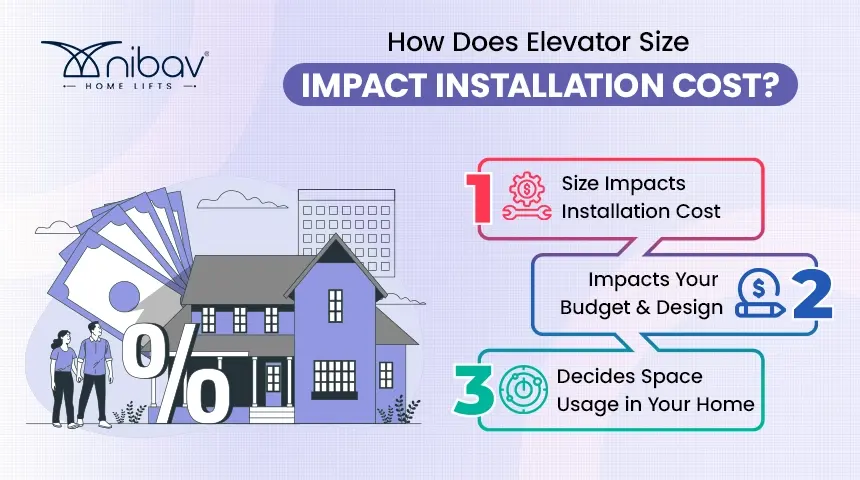
If you’re considering installing a home elevator, one of the first things to consider is its size. The size of a home elevator is important because not only will it affect how it will fit in your home, but it will also impact your construction budget and usability going forward.
In this blog, we’ll show you how home elevator sizes can impact the costs of installation projects and help you prepare for your future use of space, so you can best plan for your home.
Why Size Matters When Selecting a Home Elevator
Home elevators are offered in a variety of vacuum elevator models and sizes. The elevator size determines:
- How many passengers or weight capacity can it take
- How much space will you need in your home
- How much of the necessary construction or structural modifications could be
- Total installation and operational cost
When you decide on what size home elevator you need, it all comes down to balancing your present situation and possible needs, and available space.
How the Size of an Elevator Impacts Installation Costs
When people hear the words “home elevator,” many are immediately asking: “How much is this going to cost me?”
The size of the elevator affects several cost components:
1. Structural Changes
Larger elevators likely mean there will be more structural changes to your home:
- Hoistway Construction: With larger elevators comes a larger shaft or hoistway, which will require reconfiguration of walls, ceilings, and floors.
- Reinforcements: A larger load may mean additional support structures will be necessary, further increasing your labor and material costs.
- Floor Cutting and Replacement: Concrete floors in homes, particularly in basements, will require more work.
Smaller elevators like Nibav’s pneumatic models need minimal structural work and can often fit into existing spaces with minor modifications.
2. Material and manufacturing costs
A larger cabin will mean:
- More raw materials (steel, glass, aluminum)
- Surely larger doors, cables, and motors.
- Greater customization options: larger glass panels, different finishes, and the like.
The larger the elevator, the more expensive the material and manufacturing costs will be.
3. Installation Labor
In most cases, the larger the custom elevator, the more complicated it will be to install, along with special labor for large elevators. Labor in the United States, especially, can add a higher price to your budget, especially if you reside in a metropolitan city like Los Angeles or New York City, where contractor rates can be elevated.
Home elevators: possibly 4-5 days, depending on installation complexity.
4. Electricity Usage
Bigger elevators usually use more energy because of:
- Higher loading capacity
- Larger motors and controls
However, a lot of the modern home elevators, including Nibav, are designed to be energy efficient, no matter the size!
How Elevator Size Affects Space Planning
Installing a home elevator is far more than just creating a box in the middle of your home; proper space planning considers:
- Functionality
- Visual Integration
- Home value.
Let’s look at the details:
1. Location within the House
Big elevators will limit your placement options. You will require:
- More wall or corner space
- Enough headroom (overhead clearance)
Small elevators afford you these location options. Nibav home elevators, for example, can fit into a closet or even in between staircase landings.
Tip: Talk to an architect or elevator expert early on to make your installation adjustment location a reality!
2. Shaft Models vs. Shaftless:
Some home elevators need to be in a standard shaft. Others, like Nibav’s air-driven home elevators, do not.
- Shaftless: More space-efficient; best for retrofitting into existing homes
- Shaft Elevators: Make a more permanent, integrated feel, but require dedicated square footage.
3. Aesthetics:
Larger elevators are more obvious, and planning them in should include:
- Matching them with your house’s interior design.
- Matching the finishes, colors, and textures with the rest of the house.
- If it visually overwhelms the room.
Smaller elevators can be customized, too, but they demand less attention.
4. Multi-floor Access:
The number of floors the elevator needs to access also affects size and space planning:
- 2–3 Floors: Compact or standard-sized elevators fit well in this category.
- G+3 Floors: Larger or custom elevators may be required, especially at higher passenger rates.
Other Factors That Affect Installation Costs
Although size is a major factor, do not forget these other important factors:
- The type of technology: Hydraulic, traction, or pneumatic
- Customization Options: Glass cabins, designer finishes, or smart controls
- Compliance with Local Building Code: This factor is very important in U.S. states such as California or Florida
- Maintenance Packages: Some larger elevators will need service more often
How do I select the correct size
The correct elevator size for your residence boils down to:
- Current and Future Needs: Are you aging in place? Do you require wheelchair access?
- Space Availability: How much square footage can you afford to give up on without losing other uses in your space?
- Budget: Consider not only the initial cost, but also some ongoing operational costs, including the costs associated with maintenance, energy use, and servicing.
We, at Nibav Lifts USA, pride ourselves on delivering an answer that is both space-efficient and budget-efficient. The Series III and Series IV design ranges are designed to provide as much usability with the least amount of space.
If you are unsure about the size best suited for your residence, we provide free consultations and assessments (in person or virtually). We can help get that solution custom piece designed to meet your needs without the cost of overbuilding or oversizing.
Get in touch with our home elevator experts now and experience your home with a whole new level of luxury and comfort.
Talk to Our Experts
Kaitlin
Really helpful blog! I’ve been considering a home elevator for my aging parents, but I didn’t know size could impact both cost and functionality this much. The section on space planning and energy efficiency answered so many of my doubts. Nibav Lifts definitely looks like a practical choice.
Kaumudini Shah
This guide is packed with great insights! I liked how you broke down the cost factors, especially the structural and electrical parts. It makes the decision process so much easier for first-time buyers. The comparison between shaft and shaftless designs was also very useful. Thanks for sharing!
Bryan N Gretchen McGary
This post really helped clarify the connection between elevator size and space planning. I love how it emphasized balancing budget with future accessibility needs. The tip about consulting an architect early in the process was gold. Excellent breakdown and very easy to follow!
Joshua Collins
Such a well-detailed article! I appreciate that it doesn’t just focus on cost but also on long-term usability and aesthetics. As someone exploring options for a two-story home in Texas, this gave me a much clearer idea of what to expect from installation to operation. Nicely written!
Mary Salloum Hajali
I’ve read a few blogs about home elevators, but this one really stands out. The focus on how size impacts not only cost but energy consumption and home integration is impressive. The explanations make sense even for non-technical readers. Really helpful guide, thank you for sharing it!
Josie Ekstrand
This blog was exactly what I needed before starting my home renovation. Knowing how elevator size affects structural changes and long-term maintenance costs helped me plan better. The mention of energy-efficient models like Nibav’s is a huge plus for sustainability-conscious buyers.